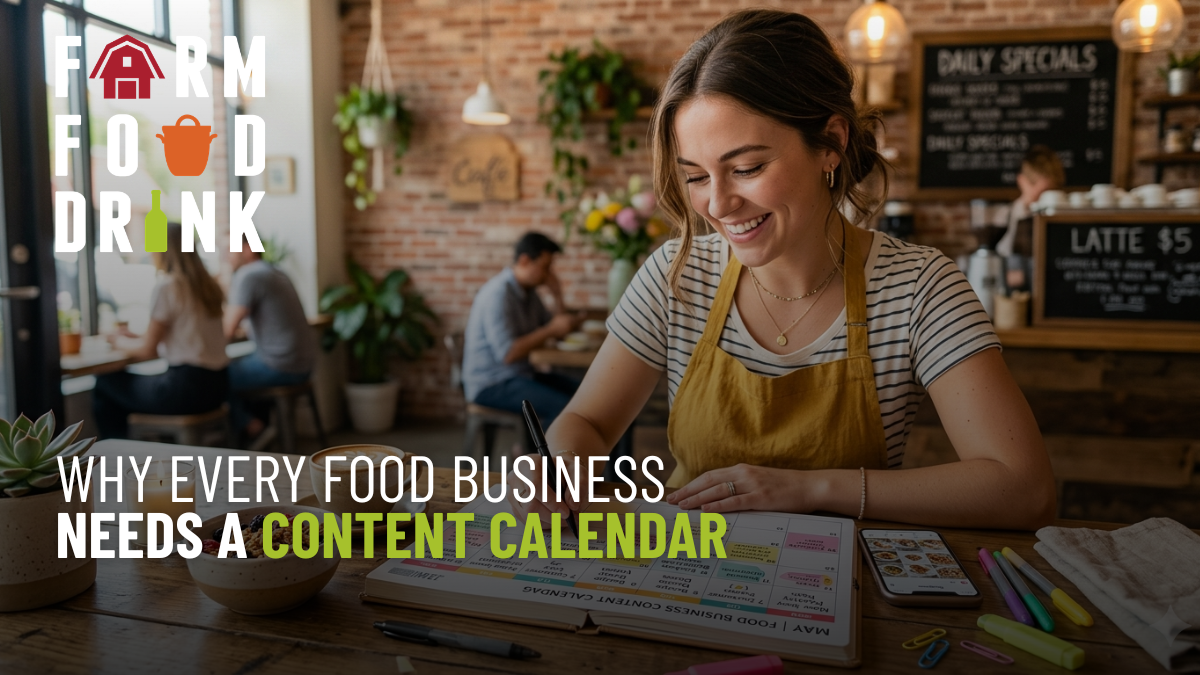
A content calendar helps you:
- Stay consistent with brand positioning (social media rewards regular activity)
- Plan for key sales seasons
- Balance your content mix between promotions, storytelling, behind-the-scenes, and community UGC (user-generated content)
- Reduce stress by knowing what’s coming next instead of scrambling to post last-minute.
1. Start with your seasons: Mark dates that are important to your business, like harvest times, product launches, key promotions, Canadian holidays and local food events.
2. Map out themes: As an example, you could have “farm-to-table stories” in the spring, BBQ recipes in the summer and gift ideas in the winter.
3. Develop your posting cadence: Only plan and schedule posts that you can consistently manage. Maybe it’s two Instagram posts a week and one newsletter a month. Stick to a schedule that is manageable with your capacity.
4. Batch your content: Dedicate one day a month to plan or photograph upcoming posts/ content.
Stay flexible: Leave space for spontaneous updates like a new product launch, customer UGC, etc.
A good content calendar doesn’t have to be fancy or complicated. It can be as simple as a spreadsheet, Google Calendar, or even a whiteboard from your office can do the trick. The key is to make it somewhere easy to access so that you’ll be able to use it regularly.