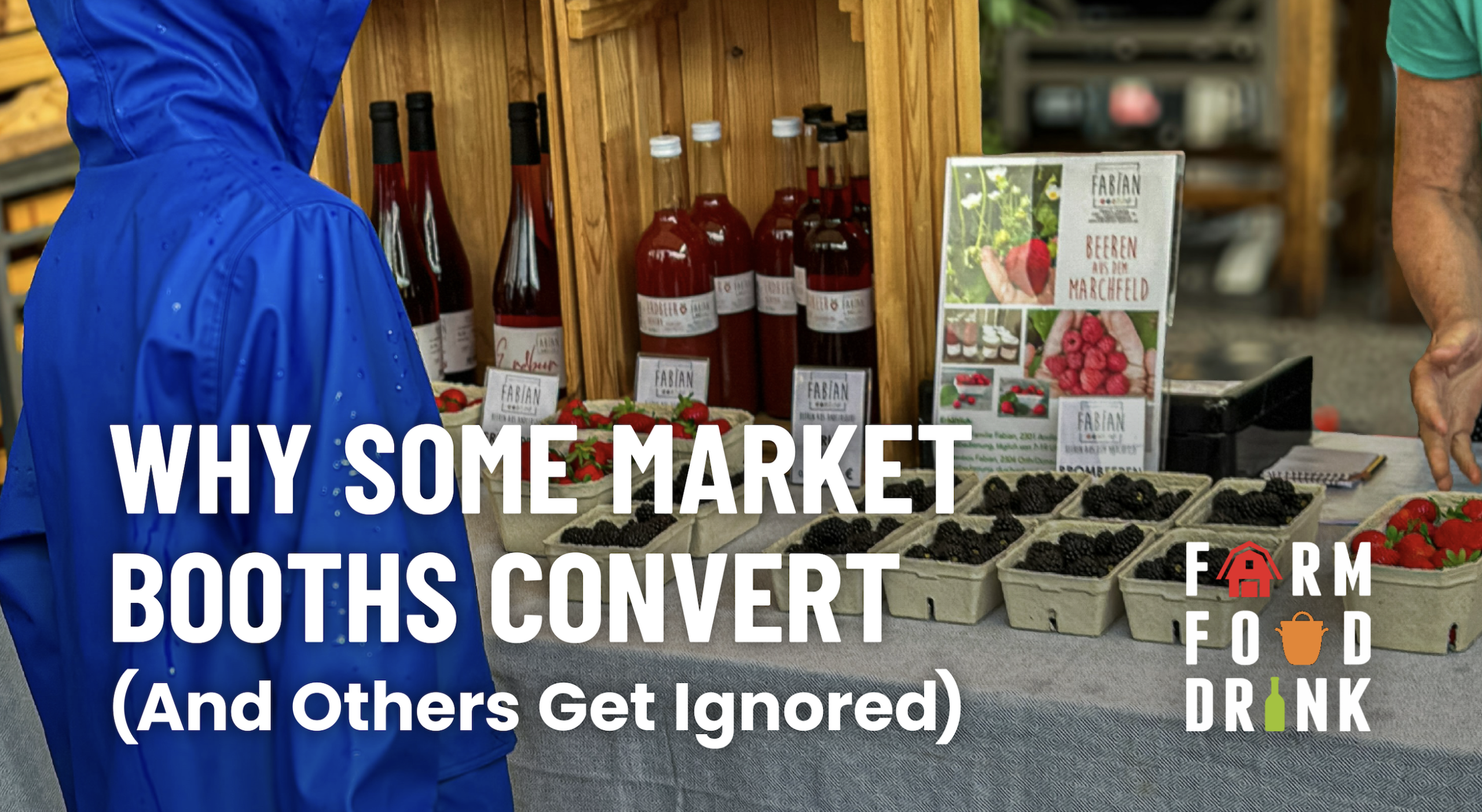
Walk through any farmers’ market on a busy weekend, and you’ll notice a pattern.
Some booths draw people in almost immediately. Customers slow down, step closer, ask questions, and buy. Others, often with just as much effort behind them, are passed over without a second look.
It’s rarely about product quality.
More often, it comes down to how clearly a booth communicates what it is, who it’s for, and why it’s worth stopping. In a fast-moving market environment, those signals matter more than most businesses expect, and when they’re missing or unclear, the impact is immediate.
Markets are high-traffic, but also high-friction
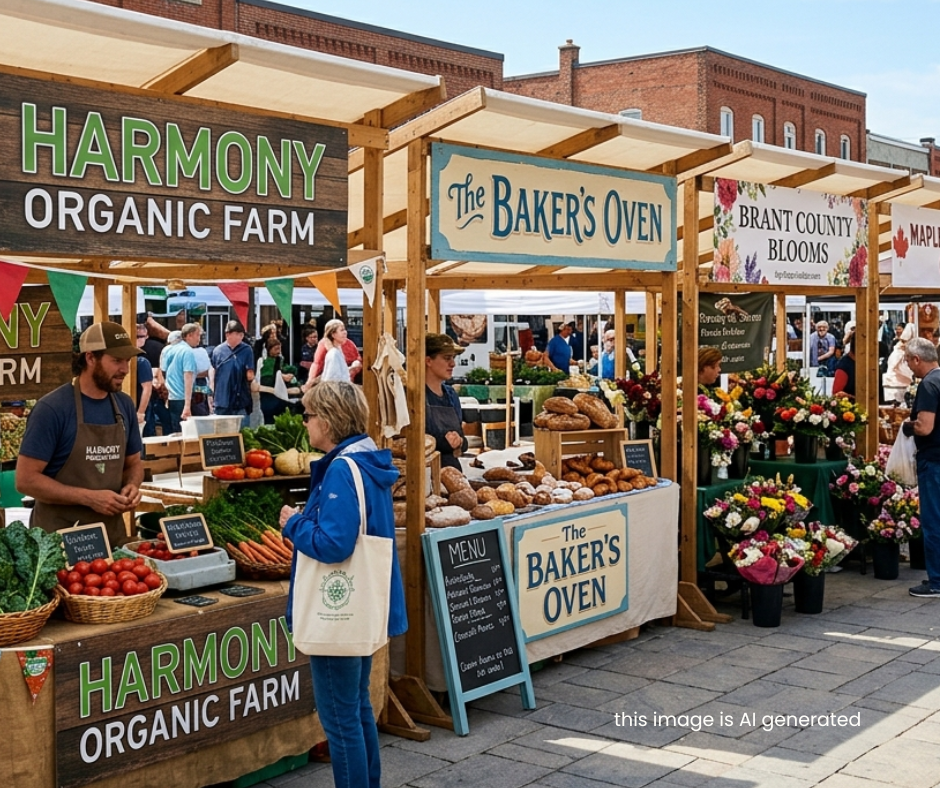
There’s a common assumption that markets are a built-in sales opportunity. The thinking is simple: if enough people walk by, sales will follow.
In reality, markets can be one of the most competitive retail environments in which a food businesses operate. Customers are moving quickly, taking in dozens of options at once. Attention is limited, and decisions are made with little information.
In that context, even small points of confusion become barriers:
- If a customer can’t immediately tell what you sell, they keep walking
- If pricing isn’t visible, they hesitate
- If your setup feels inconsistent, trust can drop
These aren’t major failures, but they’re enough to reduce the number of people who stop, engage, and ultimately buy.
Your booth is doing more work than you think
At a market, your booth isn’t just a place to display product. It’s responsible for multiple parts of the sales process at once.
Before a conversation even begins, it needs to:
- attract attention in a crowded space
- communicate your product clearly
- signal quality and price point
- make it easy for someone to understand how to buy
When those elements are working together, interactions feel natural, customers approach with context, questions are easier to answer, and decisions happen more quickly.
When they’re not, the opposite happens. You spend more time explaining, clarifying, and trying to recover lost interest.
Where most booths break down
Across markets, the same issues tend to come up, regardless of product type or price point.
Lack of clarity: Product names, ingredients, or use cases aren’t immediately visible. Customers have to stop and figure it out, which most won’t do.
Low visibility signage: Signs are too small, too low, or too detailed to be read at a distance, meaning they only work once someone is already at the table.
Missing or unclear pricing: If customers have to ask how much something costs, it creates hesitation. In a busy setting, that moment of friction often leads to disengagement.
Inconsistent presentation: Packaging, signage, and displays don’t feel connected. Even if the product is strong, the overall impression feels less established.
No clear entry point: Everything is presented equally, with no guidance on what to look at first. Without direction, customers tend to move on.
None of these are major mistakes on their own, but together, they significantly reduce conversion.
What strong brands do differently
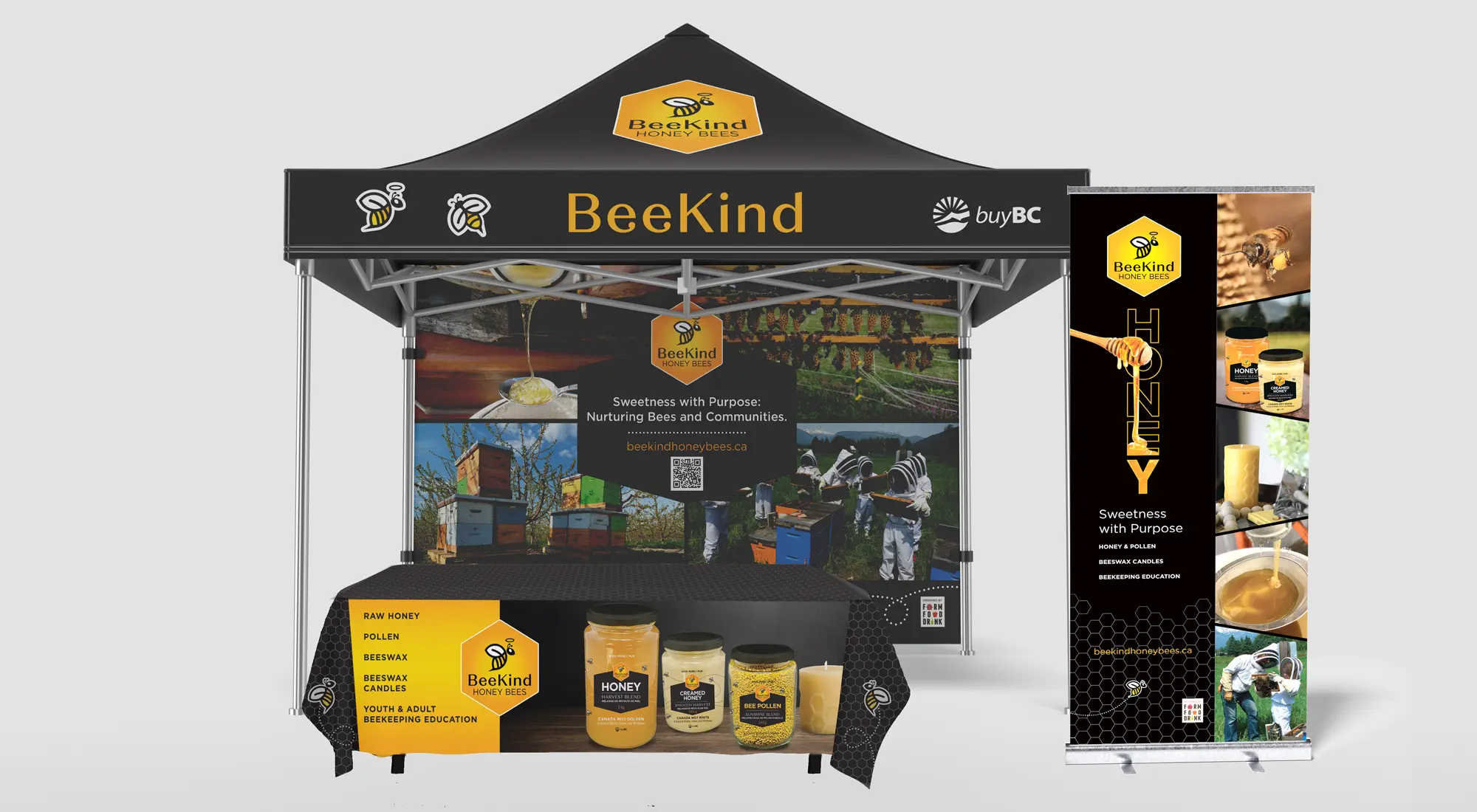
Booths that consistently perform well tend to share a few structural similarities.
- They are easy to understand from a distance.
- What’s being sold is clear without needing explanation.
- They guide attention to a natural focal point, whether it’s a best-selling product, a clear sign, or a simple layout that draws the eye.
- They reduce effort so that customers don’t have to search for information
- All booth materials and marketing assets are aligned. Meaning everything supports the same level of quality and positioning.
These elements aren’t about making a booth more “attractive”, they make it more effective.
The role of materials and setup
Not every booth needs a large investment to perform well, but certain elements have a disproportionate impact on how customers engage.
- Clear, readable signage is one of the most important. It allows customers to understand your offering before they reach your table.
- A simple, structured menu or product list reduces confusion, particularly for food and beverage products where ingredients or formats may not be obvious.
- Visible pricing removes hesitation and speeds up decision-making.
- Packaging and display play a role in perceived value. When these feel intentional and consistent, pricing feels easier to justify.
Finally, small touchpoints, such as a visible social handle or a simple call to follow or return, help extend the interaction beyond a single purchase.
Conversion vs. activity
It’s easy to measure a market day by how busy it felt, but activity doesn’t always reflect performance.
A booth can have steady traffic and still struggle to:
- convert first-time interest into purchases
- create repeat customers
- build recognition beyond that single interaction
The difference comes down to how much work the booth is doing on its own. When your setup communicates clearly and reduces friction, sales feel more consistent and less dependent on active selling.

Markets offer a valuable opportunity to connect directly with customers, but they also expose gaps quickly. When a booth is clear, structured, and aligned with the product it represents, it becomes easier for customers to engage, understand, and buy.
When it’s not, even strong products can be overlooked. In a space where attention is limited, the booths that perform best aren’t necessarily the most elaborate; they’re the ones that are clear across every touchpoint.